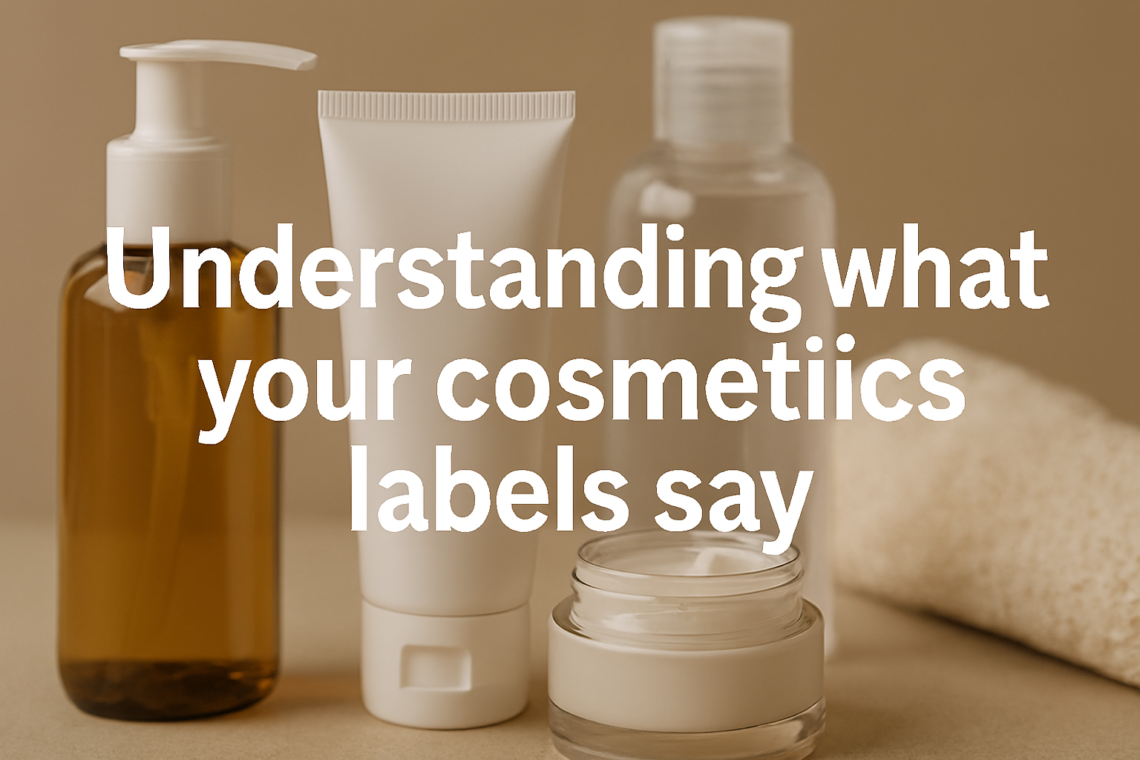
Understanding What Your Cosmetic Labels Are Telling You
Understanding What Your Cosmetic Labels Are Telling You
People are becoming increasingly concerned about health, beauty, and what they consume, aren’t they? That is why more attention has been paid to the cosmetic products used on a daily basis. This is where the importance of knowing how to read labels filled with information comes in. Labels help consumers choose products that are safe, effective, and suitable for their needs.
In practice, a cosmetic label functions as a kind of document that presents what the product contains, how it should be used, the necessary precautions, and who manufactured it. All this information is monitored by health authorities. Understanding these details is essential to protect one’s health and to avoid problems caused by improper use of cosmetic products.
Cosmetics are products made from natural or synthetic ingredients intended exclusively for external use. They are designed to cleanse, perfume, alter appearance, protect, or maintain the condition of the skin, hair, nails, and lips. In Brazil, ANVISA establishes strict rules regarding cosmetic labeling to ensure that consumers have access to all essential information and feel safe when using these products. By law, labels must display the product name, intended purpose, directions for use, ingredients, restrictions, batch number, expiration date, and information about the manufacturer or importer.
One of the most challenging aspects of interpreting cosmetic labels is the ingredient list, which usually includes technical terms. This list follows an international standard, which helps identify substances across different products. Ingredients are listed in descending order of concentration, meaning that the first items appear in the highest amounts. This allows consumers to identify the main components, potential allergens, or substances they may wish to avoid.
It is also important to pay attention to preservatives, colorants, and fragrances, as these components may cause adverse reactions, especially in individuals with sensitive skin. Therefore, careful reading of cosmetic labels helps prevent unwanted effects and promotes proper product use.
Another relevant aspect is the presence of claims on labels, such as “hypoallergenic,” “dermatologically tested,” “natural,” or “organic.” Although these terms are appealing, they do not always have clear or standardized meanings. According to ANVISA, the term “hypoallergenic” only indicates that the product was formulated to reduce the likelihood of allergic reactions, but it does not guarantee that no reactions will occur. For this reason, consumers should critically assess such claims to avoid misunderstandings.
The expiration date and batch number are essential for determining whether a cosmetic product is still safe to use. Using expired cosmetics can reduce their effectiveness and increase the risk of microbial contamination, as noted by Ribeiro and Ohara. Additionally, directions for use and warning statements must be followed carefully, especially for products intended for sensitive areas such as the eyes and mucous membranes, as well as cosmetics designed for children.
Learning how to use cosmetics correctly requires the ability to interpret labels and access reliable information. Individuals who understand labeling practices tend to make safer and more informed choices, avoid self-directed misuse of products, and apply cosmetics appropriately. In this context, health and information professionals play an important role by guiding consumers in understanding technical labeling information.
In conclusion, the ability to interpret cosmetic labels is essential for purchasing and using products safely and responsibly. When consumers understand a product’s composition, purpose, directions for use, and precautions, they are better protected against potential risks. ANVISA’s regulatory framework plays a crucial role in safeguarding public health by ensuring transparency and safety in cosmetic labeling.
Referências
BRASIL. Agência Nacional de Vigilância Sanitária. Resolução RDC nº 07, de 10 de fevereiro de 2015. Dispõe sobre os requisitos técnicos para a regularização de produtos de higiene pessoal, cosméticos e perfumes. Brasília: ANVISA, 2015. Disponível em: https://www.gov.br/anvisa. Acesso em: 01 jan. 2026.
BRASIL. Agência Nacional de Vigilância Sanitária. Cosméticos: informações ao consumidor. Brasília: ANVISA, 2022. Disponível em: https://www.gov.br/anvisa/pt-br/assuntos/cosmeticos. Acesso em: 01 jan. 2026.
DRAELOS, Z. D. Cosmetic dermatology: products and procedures. 2. ed. Oxford: Wiley-Blackwell, 2018.
RIBEIRO, R. P.; OHARA, M. T. Cosmetologia aplicada. São Paulo: Pharmabooks, 2018.
SILVA, A. R.; SANTOS, M. C. Consumo consciente e segurança no uso de cosméticos. Revista de Saúde e Consumo, v. 12, n. 2, p. 45–58, 2020. Disponível em: https://periodicos.ufrj.br. Acesso em: 01 jan. 2026.

Você pode gostar
COMO ESCOLHER PRODUTOS CERTOS PARA SEU TIPO DE PELE
Chá X funciona para retenção de líquido? O que dizem os estudos.