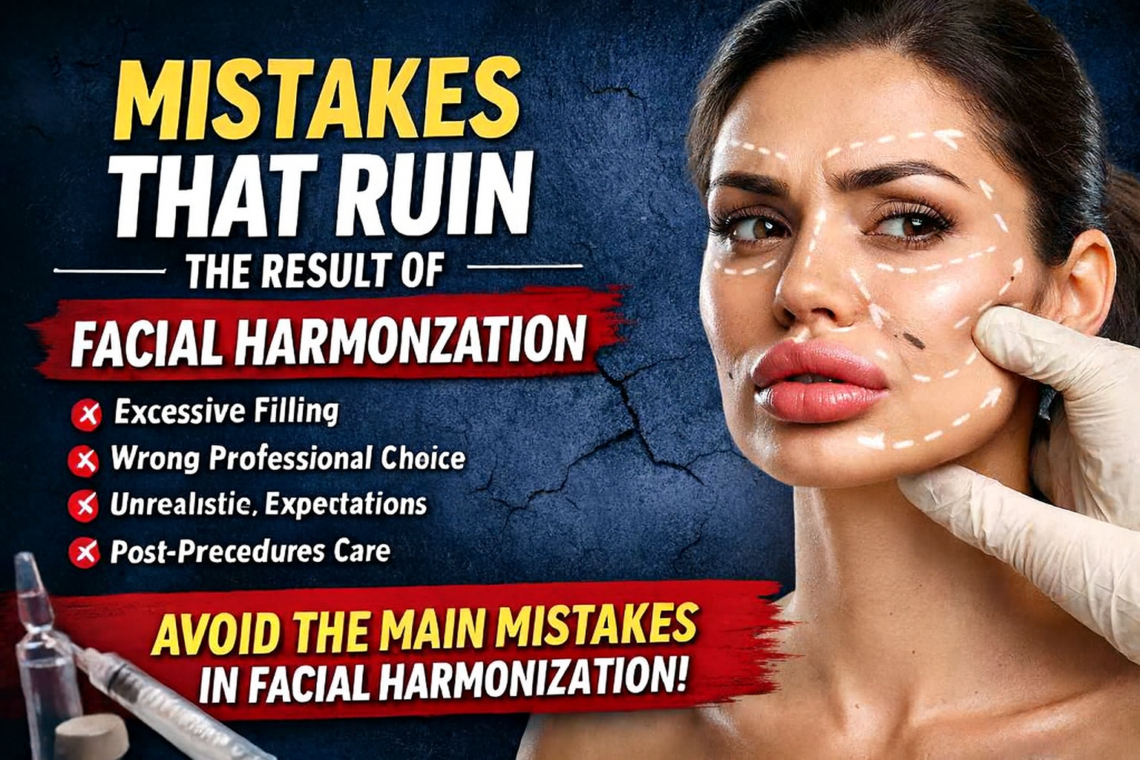
Mistakes That Ruin Facial Harmonization Results: What to Avoid for Safe and Natural Outcomes
Introduction
Facial harmonization has become one of the most sought-after aesthetic procedures in Brazil in recent years. With increasingly modern and minimally invasive techniques, the treatment aims to balance facial proportions, soften signs of aging, and enhance the face’s natural beauty. However, despite its growing popularity, many results fall short of expectations—and in some cases lead to frustration, regret, and even health complications.
Most of these unsatisfactory outcomes are not related to the procedure itself, but rather to mistakes made before, during, or after facial harmonization. Unrealistic expectations, poor professional selection, excessive product use, and lack of proper post-procedure care are among the main factors that compromise the final result. In addition, the influence of social media and artificial beauty standards often drives rushed and poorly informed decisions.
In this article, you will learn about the main mistakes that ruin facial harmonization results, why they occur, and how to avoid them. The content is educational, technically accurate without being overly complex, and accessible—helping you make safer and more informed decisions about facial aesthetics.
What Is Facial Harmonization and Why Planning Is Essential
Facial harmonization is a set of minimally invasive aesthetic procedures designed to improve facial symmetry, proportion, and balance. The most common techniques include:
-
Hyaluronic acid fillers
-
Botulinum toxin injections (Botox)
-
Collagen biostimulators
-
Lifting threads
-
Non-surgical rhinoplasty
-
Enzymatic double-chin fat reduction
Although it may appear simple, facial harmonization requires an individualized facial assessment, in-depth anatomical knowledge, and strategic planning. Skipping this initial evaluation is one of the most serious mistakes and often leads to artificial or disproportionate results.
Main Mistakes That Ruin Facial Harmonization Results
Lack of Individualized Facial Assessment
Every face has unique characteristics, including bone structure, skin thickness, muscle dynamics, age, and even ethnic traits. A common mistake is applying standardized protocols without considering these individual differences.
Why is this a problem?
-
It creates generic and artificial-looking results
-
It can lead to facial asymmetry
-
It compromises natural appearance
Facial harmonization should never aim to replicate celebrity faces or internet trends, but rather respect and enhance the patient’s unique identity.
Choosing a Professional Based Only on Price
Opting for extremely low prices is a frequent and risky mistake. Aesthetic procedures require investment in high-quality products, proper clinical infrastructure, and continuous professional training.
Associated risks include:
-
Use of non-certified products
-
Insufficient technical expertise
-
Increased likelihood of complications
Choosing a professional should be based on education, experience, professional licensing, and clinical track record—not price alone.
Excessive Facial Filling
Overcorrection is one of the most visible and widely discussed causes of failed facial harmonization. Excessive use of hyaluronic acid can distort facial features and negatively affect natural expression.
Consequences of excess filler include:
-
Puffy or heavy facial appearance
-
Artificial-looking results
-
Product migration
-
Cumulative long-term effects
The principle of “less is more” is especially important in facial aesthetics.
Ignoring Facial Anatomical Limits
Certain facial areas carry higher vascular and nerve risks. Incorrect injection depth or placement can result in serious complications.
Examples include:
-
Vascular occlusion
-
Tissue necrosis
-
Permanent asymmetry
For this reason, deep knowledge of facial anatomy is essential to ensure patient safety and optimal outcomes.
Not Respecting Age and the Natural Aging Process
Another common mistake is attempting to excessively “rejuvenate” mature faces by creating features that do not align with the patient’s biological age.
Negative impacts include:
-
Results that appear inconsistent with age
-
Loss of facial authenticity
-
Artificial appearance
Facial harmonization should soften the signs of aging—not erase a person’s facial history.
Poor Alignment Between Expectations and Reality
Many patients arrive at consultations with unrealistic expectations influenced by digital filters and edited images.
When expectations are not properly managed:
-
Patients may feel frustrated with the outcome
-
Dissatisfaction can occur even when the procedure is technically successful
It is the professional’s responsibility to provide ethical guidance, clarify limitations, and align expectations realistically.
Use of Inadequate or Low-Quality Products
The origin and quality of products used directly impact both safety and longevity of results.
Potential issues include:
-
Adverse reactions
-
Reduced durability
-
Health risks
Only products approved and regulated by health authorities should be used.
Neglecting Post-Procedure Care
Even well-executed procedures can have compromised results if post-procedure care is neglected.
Common patient mistakes include:
-
Early sun exposure
-
Intense physical activity
-
Self-medication
-
Manipulating treated areas
Following post-procedure guidelines is a critical part of achieving successful results.
Undergoing Excessive Procedures Without Proper Intervals
Rushing to “fix everything at once” can result in product overload and progressively unnatural results.
Possible consequences include:
-
Fibrosis
-
Changes in skin texture
-
Difficulty reversing results
Respecting treatment intervals and reassessing outcomes over time is essential.
Lack of Follow-Up and Proper Maintenance
Facial harmonization is not permanent. Each technique has a specific duration and requires periodic monitoring.
Without proper maintenance:
-
Facial balance can deteriorate over time
-
Progressive asymmetry may occur
How to Avoid Facial Harmonization Mistakes
Checklist for a safer procedure:
-
Choose qualified and licensed professionals
-
Prioritize individualized facial assessment
-
Avoid miracle promises
-
Value natural-looking results
-
Follow post-procedure instructions strictly
-
Understand that aesthetics is a process, not a one-time event
Frequently Asked Questions (FAQ)
1. Can facial harmonization go wrong even with a skilled professional?
Yes. Individual factors and post-procedure care play a significant role in the final outcome.
2. Is it possible to reverse a poorly done facial harmonization?
In some cases, yes—especially when hyaluronic acid is involved. However, full reversal is not always possible.
3. How long do facial harmonization results last?
It depends on the technique used, typically ranging from 6 months to 2 years.
4. Can facial harmonization make you look older over time?
Yes, when poorly planned or excessively performed, it can negatively affect long-term appearance.
5. Is there an ideal age for facial harmonization?
There is no fixed age. The decision should be based on individual needs, indications, and goals.
Conclusion
Facial harmonization is a powerful tool in modern aesthetics, but it requires responsibility, technical expertise, and patient awareness. Most mistakes that ruin facial harmonization results could be avoided with proper planning, careful professional selection, and realistic expectations.
Rather than following trends, true harmonization lies in respecting individuality, valuing natural beauty, and understanding that beauty does not mean uniformity. High-quality information is the first step toward safe decisions and satisfying results.

Você pode gostar

The Reality of Beauty: How Digital Filters Affect Your Mind and Heart
After all, what is the difference between a beauty treatment and a medical treatment?