Facial Beauty: Everything You Need to Know About Facial Fillers
Facial Beauty: Everything You Need to Know About Facial Fillers
Facial fillers have become extremely popular in recent years! People are looking to rejuvenate their appearance, enhance facial features, and boost self-esteem without undergoing major surgery or dealing with long recovery periods. However, unlike skincare creams, facial fillers require in-depth knowledge of facial anatomy, skin structure, and injectable products. That’s why it’s essential to truly understand the procedure through clear and reliable information.
Even though facial fillers are trending on social media, they should never be seen as a simple or risk-free treatment. When performed improperly or by unqualified professionals, complications can occur. That’s why it’s important to understand what facial fillers are, how they work, the different types available, their benefits, limitations, and necessary precautions. This article is meant to inform and educate, but it does not replace a professional consultation.
[INTERNAL LINK: minimally invasive aesthetic procedures]
Facial Fillers: What Are They?
Facial fillers are quick aesthetic treatments that involve injecting biocompatible substances into specific areas of the face. The goal is to restore lost volume, soften wrinkles and expression lines, reshape facial contours, or correct minor asymmetries. They can be used both for aesthetic enhancement and for correcting features that cause discomfort or dissatisfaction.
Over time, the body naturally loses collagen, elastin, facial fat, and bone density. These changes lead to sagging skin, wrinkles, and alterations in facial structure. Facial fillers help replace lost volume or stimulate cellular activity, resulting in a more youthful and refreshed appearance.
Every face is unique. There are different products, techniques, and indications, and an experienced professional will determine the best approach for each individual.
What Are Facial Fillers Used For?
Facial fillers go far beyond improving appearance. They are commonly used to:
-
Reduce wrinkles and fine lines
-
Correct deep folds, such as nasolabial folds
-
Enhance cheekbone volume
-
Define the jawline
-
Increase or reshape the lips
-
Improve under-eye hollows
-
Enhance facial harmony
-
Camouflage minor asymmetries
Substances Used in Facial Fillers
Hyaluronic Acid
Hyaluronic acid is currently the most popular filler. It is a substance naturally produced by the body and is responsible for skin hydration and elasticity. In aesthetic treatments, it is used in gel form with different densities depending on the treatment area.
Advantages:
-
High safety profile
-
Naturally absorbed by the body over time
-
Temporary results
-
Reversible if necessary
-
Low risk of complications when properly applied
Calcium Hydroxylapatite
This filler provides immediate volume and also stimulates collagen production over time.
Recommended for:
-
Mild skin sagging
-
Jawline definition
-
Cheekbone enhancement
Poly-L-Lactic Acid
Rather than providing immediate volume, this substance stimulates collagen production. Results appear gradually and tend to last longer.
Ideal for:
-
Skin laxity
-
General volume loss
-
Overall facial rejuvenation
Types of Facial Fillers
Hyaluronic Acid Fillers
The most common option for both first-time patients and those seeking touch-ups. It can be used on lips, under-eye areas, facial folds, and for contouring.
Lip Fillers
Used to enhance volume, definition, or hydration while respecting each person’s natural lip shape.
Under-Eye Fillers
Indicated for deep under-eye hollows caused by bone structure changes. Specific products and precise techniques are required.
Jawline and Chin Fillers
Help define facial contours, improve profile balance, and enhance overall facial harmony.
How Is the Procedure Performed?
Facial fillers are performed in a clinical setting following strict hygiene protocols. The typical steps include:
-
Facial analysis
-
Treatment planning
-
Skin cleansing
-
Application of topical or local anesthesia
-
Injection using a needle or cannula
-
Manual shaping and final adjustments
The procedure usually takes between 30 and 60 minutes, depending on the treated areas.
Who Can Perform Facial Fillers?
Facial fillers must be performed exclusively by licensed and trained professionals, such as physicians or dentists qualified in facial aesthetics, in accordance with local regulations. Choosing a qualified professional is essential for safety and satisfactory results.
Benefits of Facial Fillers
-
Minimally invasive procedure
-
Immediate or gradual results
-
Quick recovery
-
Personalized treatment plans
-
Improvement in self-esteem and confidence
Risks and Side Effects
When properly performed, facial fillers are generally safe. However, possible side effects include:
-
Swelling
-
Redness
-
Bruising
-
Sensitivity
Serious complications are rare but may occur when the procedure is done by unqualified professionals.
⚠️ Important: This content does not replace a professional consultation.
Care Before and After Facial Fillers
Before:
-
Inform the professional about your full medical history
-
Avoid blood-thinning medications (only with medical approval)
-
Do not undergo the procedure if you have active infections
After:
-
Avoid intense sun exposure
-
Do not massage the treated area
-
Follow all professional aftercare instructions
[INTERNAL LINK: post-procedure aesthetic care]
How Long Do Facial Fillers Last?
Duration depends on the product used, individual metabolism, and treated area. On average:
-
Hyaluronic acid: 6 to 18 months
-
Calcium hydroxylapatite: up to 18 months
-
Poly-L-lactic acid: up to 24 months
Are Facial Fillers Permanent?
No. Most fillers are gradually absorbed by the body, which enhances safety and allows adjustments over time.
Frequently Asked Questions
1. Does facial filler treatment hurt?
Usually minimal discomfort, controlled with anesthesia.
2. Are results immediate?
It depends on the product used.
3. Is there a minimum age for facial fillers?
There is no fixed age; indication depends on individual needs.
4. Will the result look artificial?
When properly done, results are natural.
5. Who should avoid facial fillers?
Pregnant individuals, people with active infections, or uncontrolled autoimmune diseases require special caution.
Conclusion
Facial fillers are a modern and versatile option for facial rejuvenation and aesthetic enhancement. When performed by qualified professionals using approved products, results are generally safe and satisfying. However, the procedure is not risk-free and requires proper evaluation and care. Being well-informed is the first step toward making responsible decisions about health and beauty.
References
BRAZILIAN HEALTH REGULATORY AGENCY (ANVISA). Aesthetics with safety — information on aesthetic products and procedures. Available at: https://www.gov.br/anvisa/pt-br/assuntos/campanhas/estetica. Accessed on: Feb. 1, 2026.
ANVISA. Safe procedures — guidelines for individuals undergoing aesthetic procedures. Available at: https://www.gov.br/anvisa/pt-br/assuntos/campanhas/estetica/procedimento-seguro. Accessed on: Feb. 1, 2026.
DUARTE, [Various authors]. Implications of hyaluronic acid in aesthetics: an integrative review. Revista FT – Scientific Journal. Available at: https://revistaft.com.br/implicacoes-do-acido-hialuronico-na-estetica-uma-revisao-integrativa/. Accessed on: Feb. 1, 2026.
VASCONCELOS, [Authors]. Different applications of hyaluronic acid in facial aesthetics: an integrative review. Revista FT – Scientific Journal. Available at: https://revistaft.com.br/as-diferentes-aplicacoes-do-acido-hialuronico-na-estetica-facial-uma-revisao-integrativa/. Accessed on: Feb. 1, 2026.
LIMA, C. S. et al. Lip filling with hyaluronic acid: a literature review. Journal of Multidisciplinary Dentistry, 2021. DOI: https://doi.org/10.46875/jmd.v11i2.768. Available at: https://jmdentistry.com/jmd/article/view/768. Accessed on: Feb. 1, 2026.
PITON, L. M. M. et al. Main complications associated with facial filling using hyaluronic acid: a literature review. Ibero-American Journal of Humanities, Sciences and Education, vol. 11, no. 11, 2025. DOI: https://doi.org/10.51891/rease.v11i11.22348. Available at: https://periodicorease.pro.br/rease/article/view/22348. Accessed on: Feb. 1, 2026.
WORLD HEALTH ORGANIZATION (WHO). World Health Organization. Available at: https://pt.wikipedia.org/wiki/Organiza%C3%A7%C3%A3o_Mundial_da_Sa%C3%BAde. Accessed on: Feb. 1,

Você pode gostar

Mounjaro Approved in Brazil: What It Means
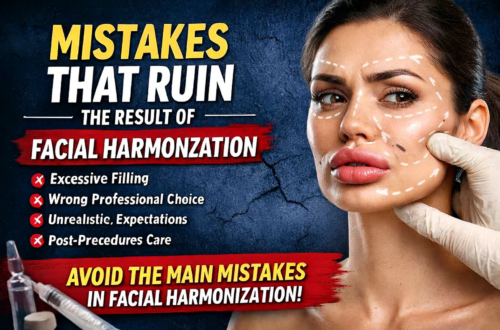
Mistakes That Ruin Facial Harmonization Results: What to Avoid for Safe and Natural Outcomes