Does Mounjaro Really Work for Weight Loss? What You Need to Know
Obesity has become a chronic and serious problem that increases the risk of heart disease, type 2 diabetes, high cholesterol, and can shorten life expectancy. Since controlling weight through diet and exercise alone is often difficult, doctors have increasingly turned to medications. That’s where Mounjaro comes in—a relatively new drug for type 2 diabetes that has also been helping people lose weight. But hold on—let’s take a closer look at its benefits, risks, and what is often left unsaid.
Mounjaro works on two hormones at the same time: GLP-1 and GIP. This action increases insulin release when needed, reduces glucagon production, slows gastric emptying, and enhances the feeling of fullness. As a result, it helps control blood sugar levels and promotes weight loss (BEZERRA, 2025, p. 2). Because it targets two hormones, it appears to be more powerful than medications that act only on GLP-1.
Clinical trials have shown that Mounjaro leads to significant weight loss. Some studies reported reductions of 15% to 22% of initial body weight over 72 weeks, depending on the dose used (JASTREBOFF et al., 2022, p. 205). These results are greater than those achieved with similar drugs, making Mounjaro one of the most effective pharmacological options for weight loss (MDPI REVIEW, 2025, p. 8).
Beyond weight reduction, Mounjaro also improves blood glucose control, reduces insulin resistance, and provides cardiovascular benefits, such as improvements in blood pressure and cholesterol levels (PUBMED REVIEW, 2023, p. 4). For this reason, it is particularly suitable for individuals with obesity associated with type 2 diabetes or metabolic syndrome.
However, it is not all positive. Mounjaro does have side effects. The most common are nausea, vomiting, diarrhea, and constipation, especially at the beginning of treatment or during dose escalation (STATPEARLS, 2025, p. 6). In rare cases, pancreatitis, hypoglycemia (when combined with other diabetes medications), and kidney problems may occur. Therefore, close medical supervision is essential.
Another issue that is rarely discussed is what happens after stopping the medication. Evidence suggests that weight regain may occur, as the drug mainly regulates appetite and metabolism while it is being used (THE GUARDIAN, 2025). This reinforces the idea that medication alone is not enough—long-term lifestyle changes, including healthy eating and regular exercise, are crucial.
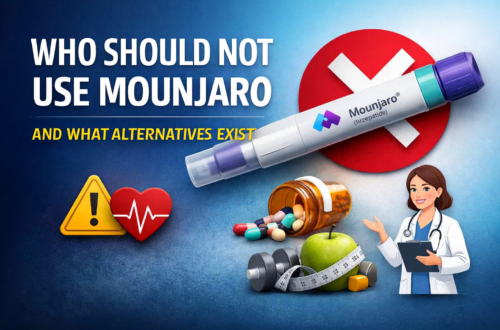
In Brazil, ANVISA has approved Mounjaro for the treatment of type 2 diabetes and for weight management in adults with obesity or overweight associated with comorbidities, provided it is combined with diet and physical activity (ANVISA, 2025). Even so, treatment must be individualized, as there are contraindications, such as a history of thyroid cancer or pregnancy.
In summary, Mounjaro does promote weight loss and offers metabolic benefits, but it must be used with caution. It is not a magic solution for obesity, but rather an additional therapeutic tool. The decision to use it should be made by a physician, weighing the benefits and risks and assessing the patient’s willingness to adopt lasting lifestyle changes.
Finally, Mounjaro represents an important advance in the treatment of obesity and type 2 diabetes by supporting weight reduction. However, due to its risks, costs, and the possibility of weight regain, the ideal approach involves comprehensive, multidisciplinary, and patient-centered care.
ANVISA. Mounjaro® (tirzepatide): new therapeutic indication for weight control. National Health Surveillance Agency. Available at:
https://www.gov.br/anvisa/pt-br/assuntos/medicamentos/novos-medicamentos-e-indicacoes/mounjaro-r-tirzepatida-nova-indicacao
Accessed on: Jan. 16, 2026.
BEZERRA, T. A. R. Use of tirzepatide (Mounjaro) as a therapeutic agent in obesity and type 2 diabetes: a systematic review on metabolic control with GLP-1 agonists. Journal of Diabetology1821 Research, 2025. Available at:
https://directivepublications.org/journal-of-diabetology-research/use-of-tirzepatida-mounjaro-as-a-therapeutic-agent-in-obesity-and-type-2-diabetes-a-systematic-review-on-metabolic-control-with-glp-1-agonists
Accessed on: Jan. 16, 2026.
JASTREBOFF, A. M. et al. Tirzepatide once weekly for the treatment of obesity. New England Journal of Medicine, v. 387, n. 3, p. 205–216, 2022. Available at:
https://www.nejm.org/doi/full/10.1056/NEJMoa2206038
Accessed on: Jan. 16, 2026.
MDPI REVIEW. Emerging role of GLP-1 agonists in obesity: a comprehensive review of randomized controlled trials. International Journal of Molecular Sciences, 2025. Available at:
https://www.mdpi.com/1422-0067/24/13/10449
Accessed on: Jan. 16, 2026.
PUBMED REVIEW. Efficacy and safety of tirzepatide for the treatment of overweight or obesity: systematic review and meta-analysis. PubMed, 2023. Available at:
https://pubmed.ncbi.nlm.nih.gov/37253796/
Accessed on: Jan. 16, 2026.
STATPEARLS. Tirzepatide. StatPearls Publishing, 2025. Available at:
https://www.ncbi.nlm.nih.gov/books/NBK572060/
Accessed on: Jan. 16, 2026.
THE GUARDIAN. People who stop using Mounjaro experience reversal of health benefits, study says. The Guardian, 2025. Available at:
https://www.theguardian.com/society/2025/nov/24/mounjaro-health-benefits-reversed-regain-weight-after-stop-using
Accessed on: Jan. 16, 2026.
Você pode gostar